All Posts


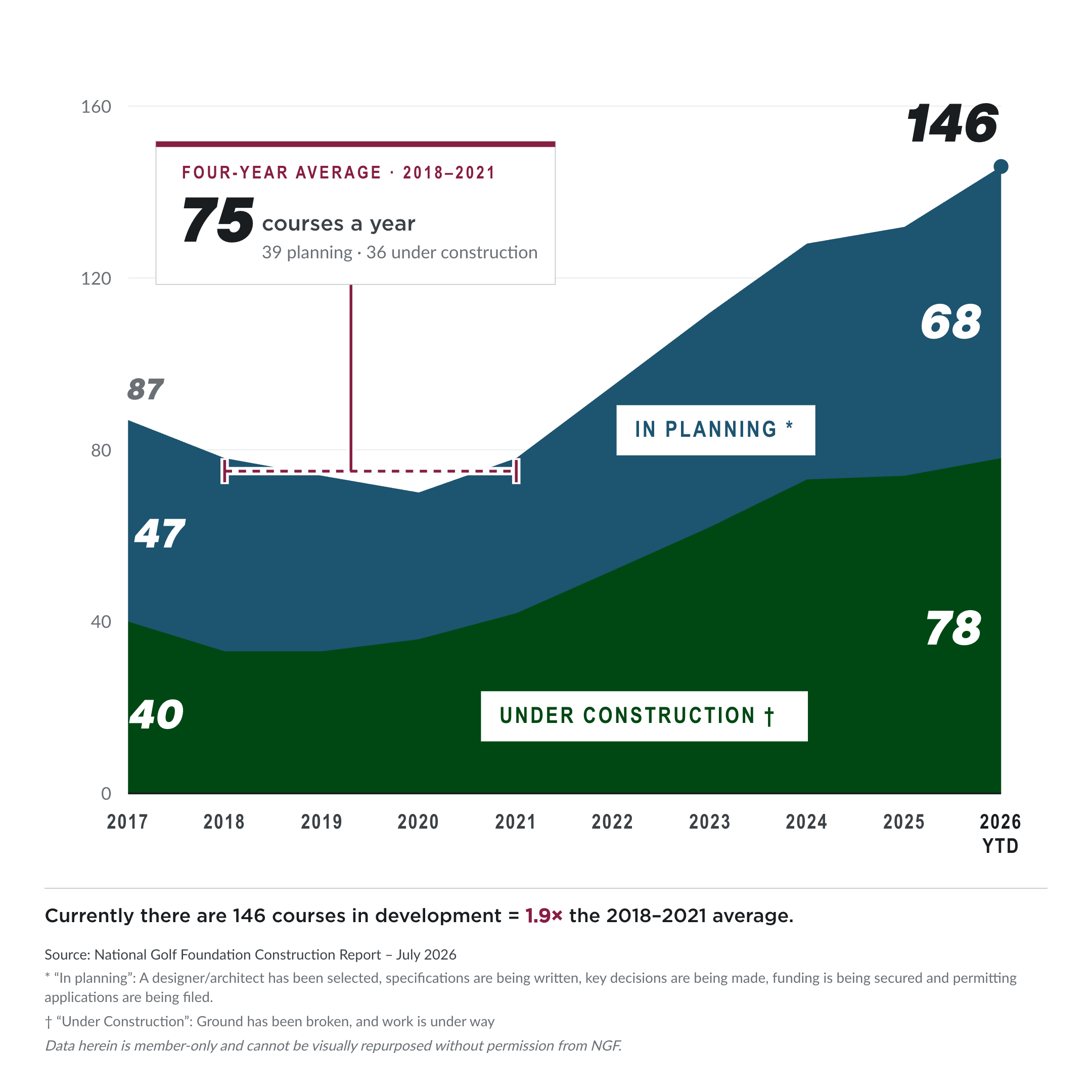
New U.S. golf course development is at its highest level in more than a decade, with active projects in 32 states — including three which together account for 40% of new course activity.
Hollywood Beach GC Welcomes Public Back After Two-Year Restoration Project
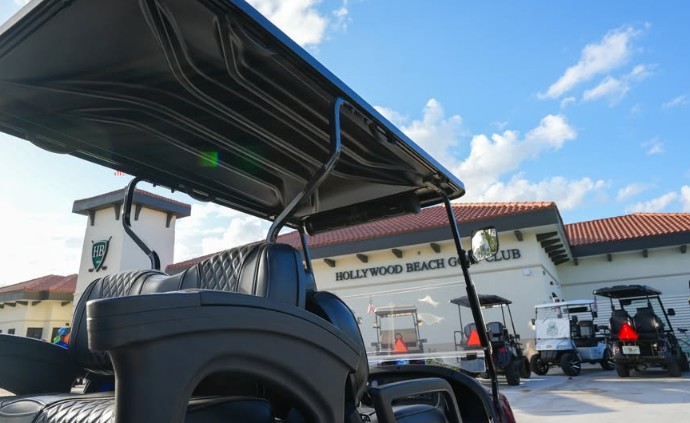
For the National Golf Foundation’s consulting team, the recent reopening of Hollywood Beach Golf Club in South Florida represents the successful culmination of a years-long collaboration on the restoration of a century-old Golden Age public course – an extensive effort driven by city officials and supported by residents.

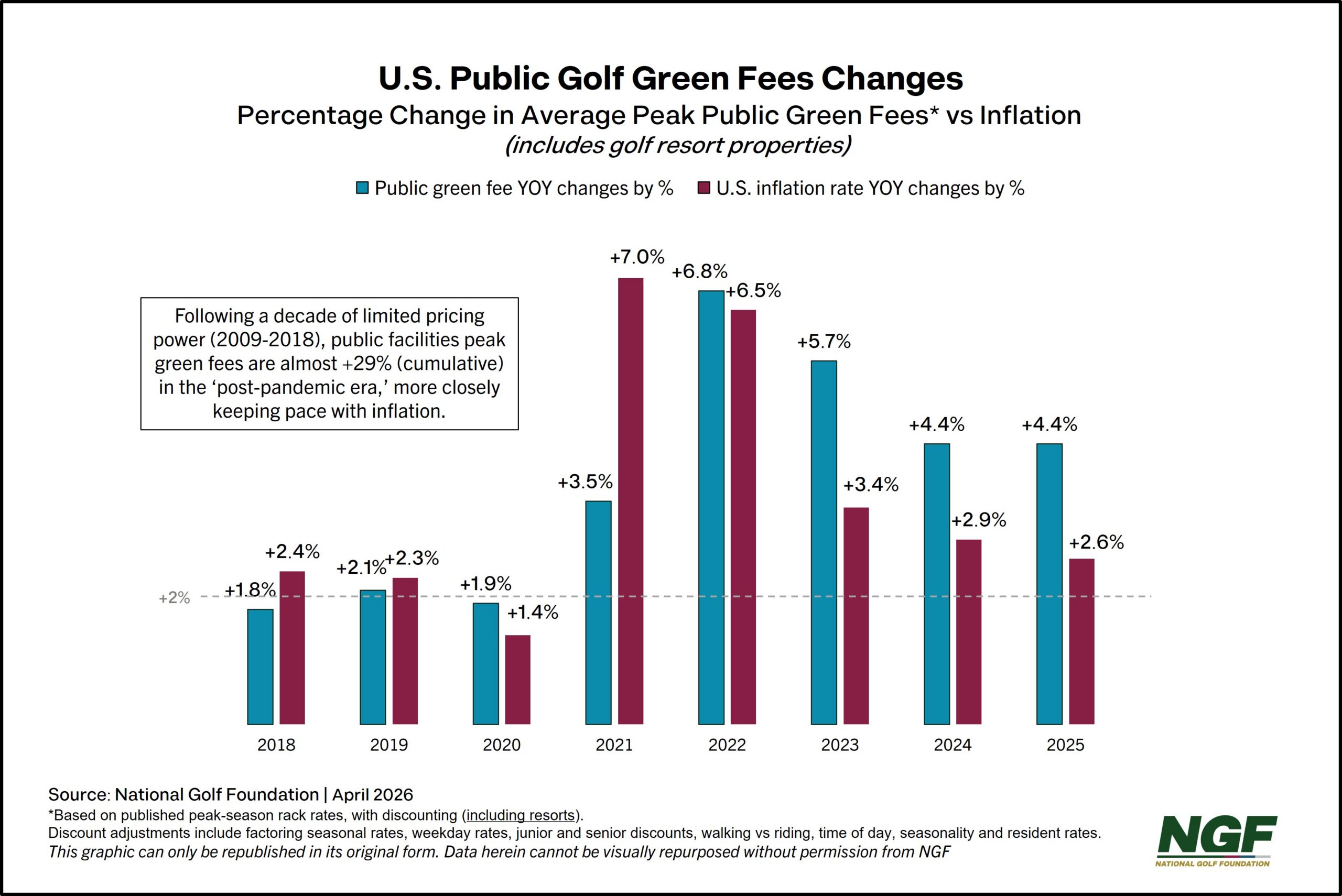
Following a decade of limited pricing power, peak green fees at public golf facilities in the U.S. have increased during the 'post-pandemic era." How closely do these increases mirror that of changes in inflation over that same period from 2019 to 2025?
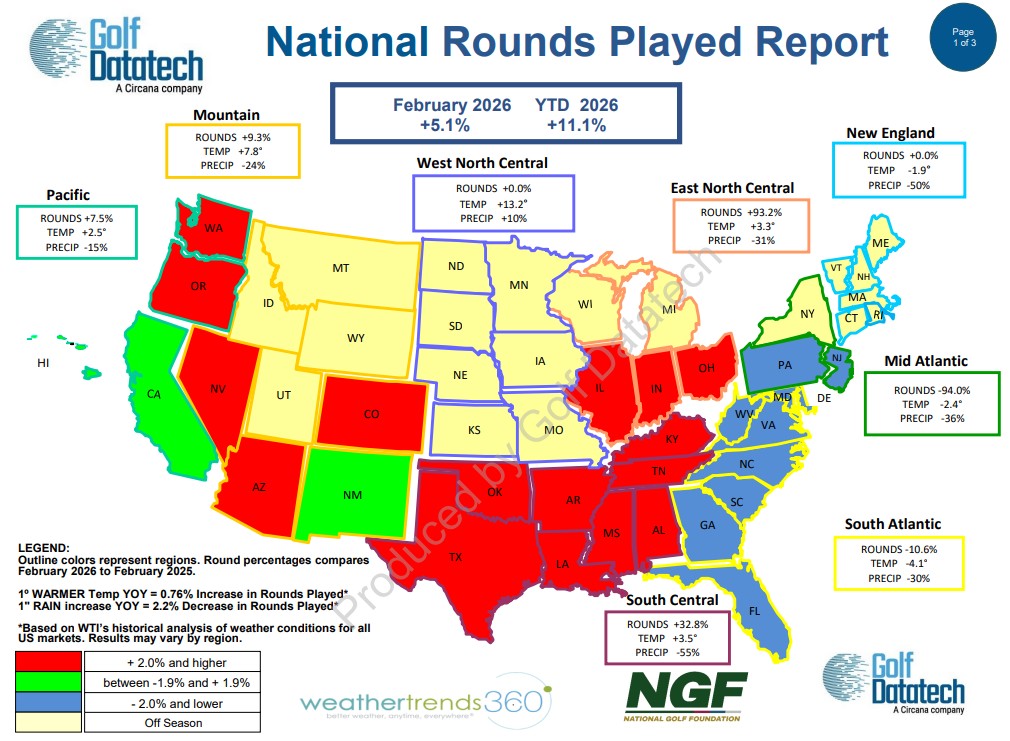
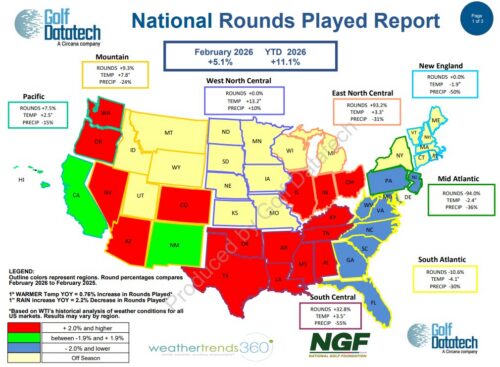
National play sees second straight YOY monthly gain to start 2026
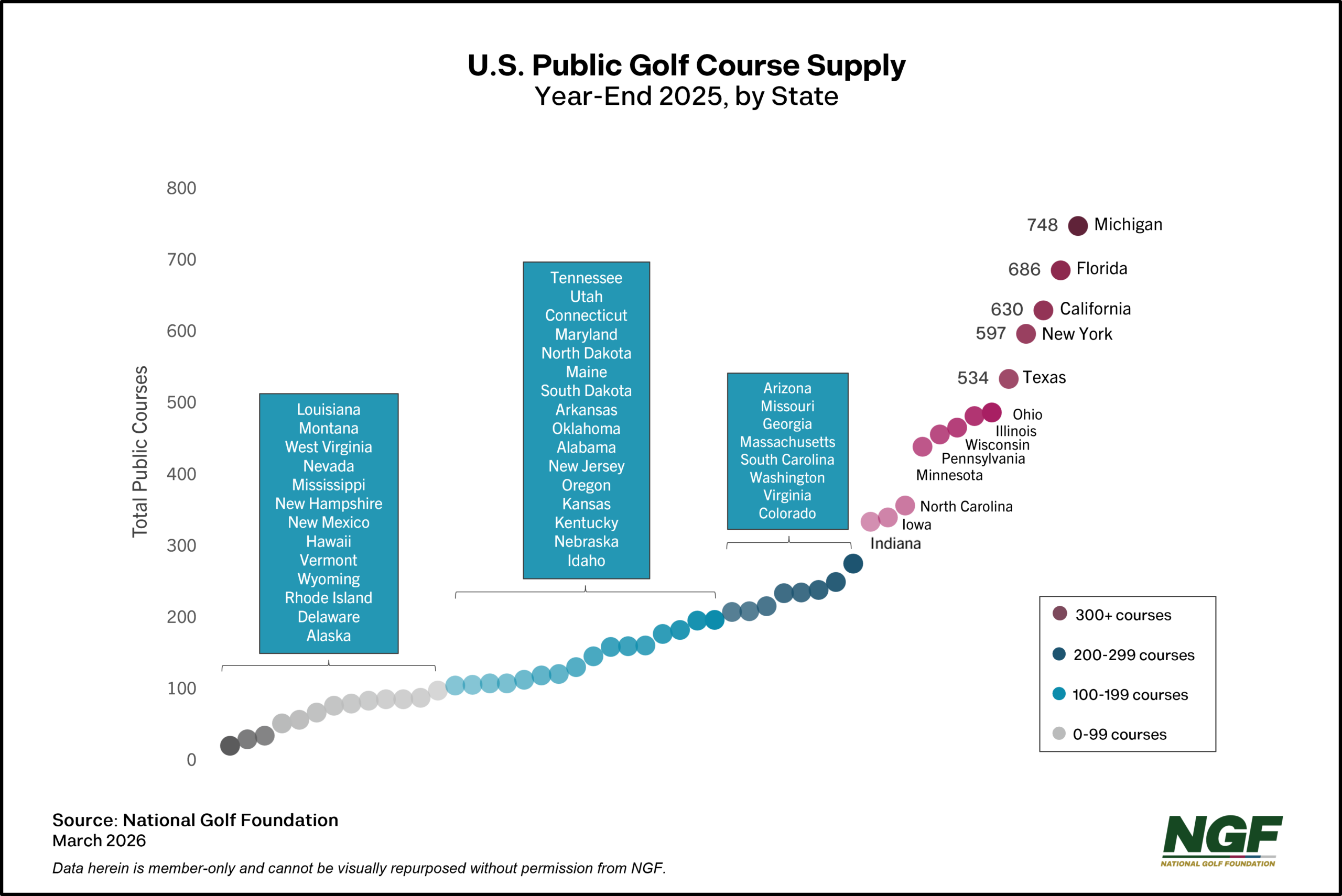
Golf is big business -- with a direct U.S. economic impact of almost $102 billion annually. NGF produced the most recent, and often-quoted U.S. Golf Economic Impact Study, and also conduct standard reports on golf's impact at the state level. These numbers are a part of many of our latest one-page state summaries that detail key supply and demand data at a more localized level -- now available to members.
Member Supply Update: Sizing & Scoping the U.S. Golf Market
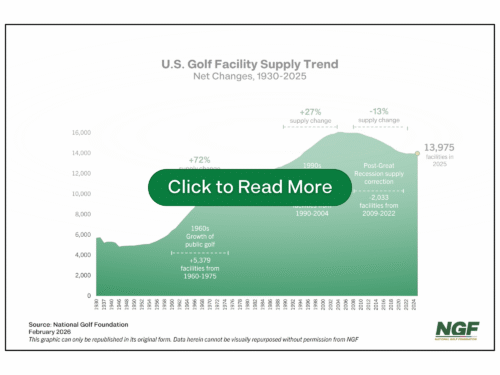
This member research complements NGF's annual Golf Facilities in the U.S. Report, offering details and visuals on historical supply trends, public and private golf course and facility totals, trends and counts in the golf resort and residential space, and the best-supplied states in various categories.
Golf Facilities in the U.S. – 2026
Record Rounds Again in 2025, with 2K Fewer Courses
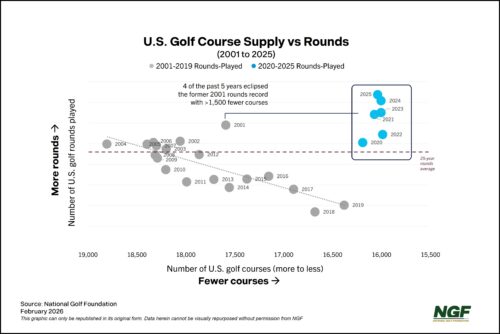
The post-pandemic surge has proven more durable than some initially expected, with rounds of golf at U.S. courses climbing to yet another all-time high in 2025. It's a run that has similarities to the early 2000s "Tiger Boom," but is far from apples-to-apples comparison.
Topics: Course Operations, Facility Management
Moderate year-over-year gain pushes 2025 closer to record-setting territory
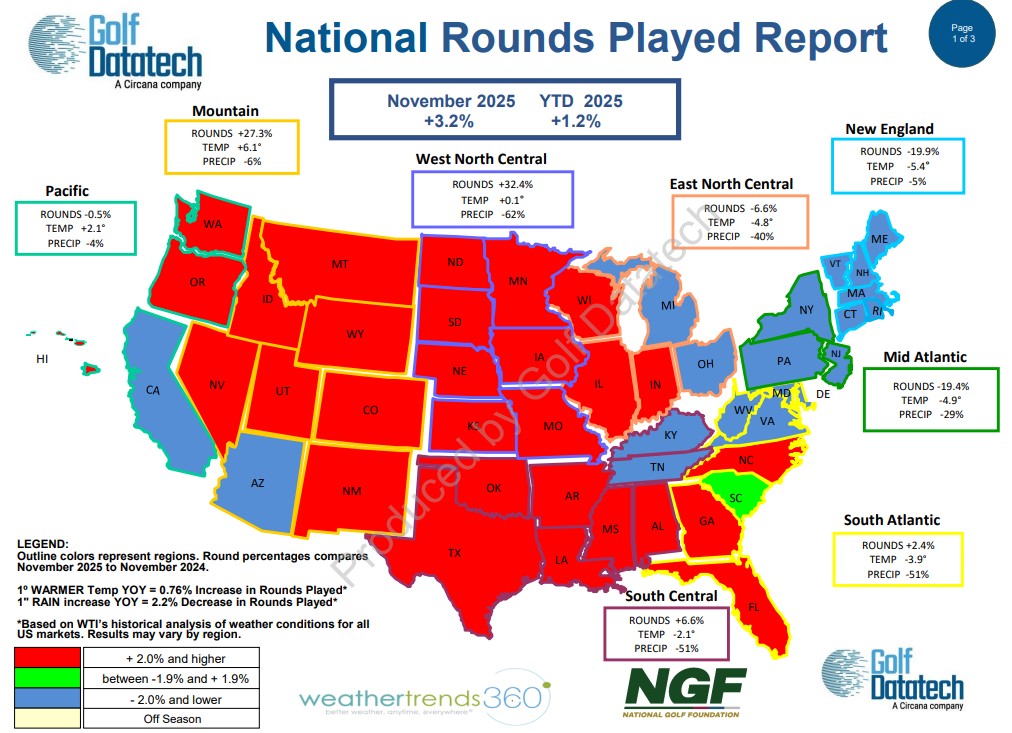
Limited play in Northeast states due to weather is offset by warmer weather increases further west as November rounds get a slight boost on a national level.
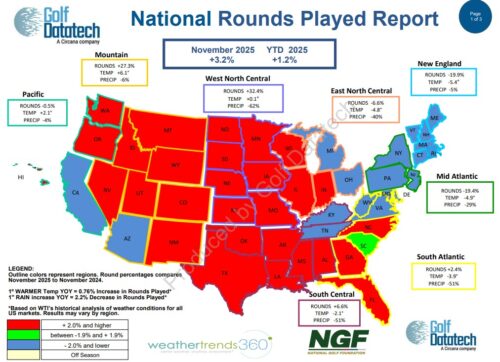
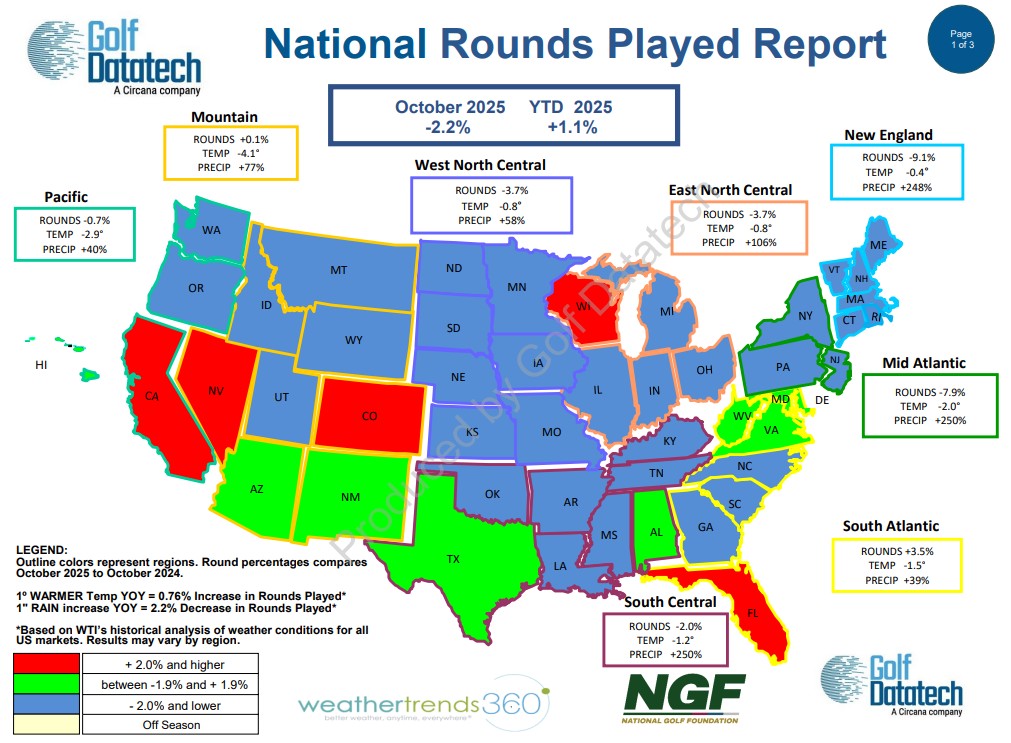
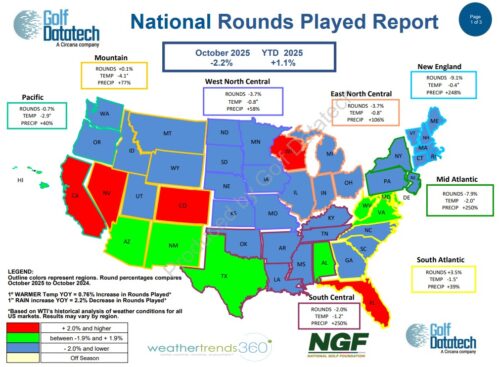
October rounds see slight national year-over-year decline as cooler, wetter weather slows strong play momentum in certain regions.