Golf in Service of Community
“A good basic philosophy to adopt is the generally accepted theory that the success of any golf course is not so much the revenue it produces but the number of citizens served.”
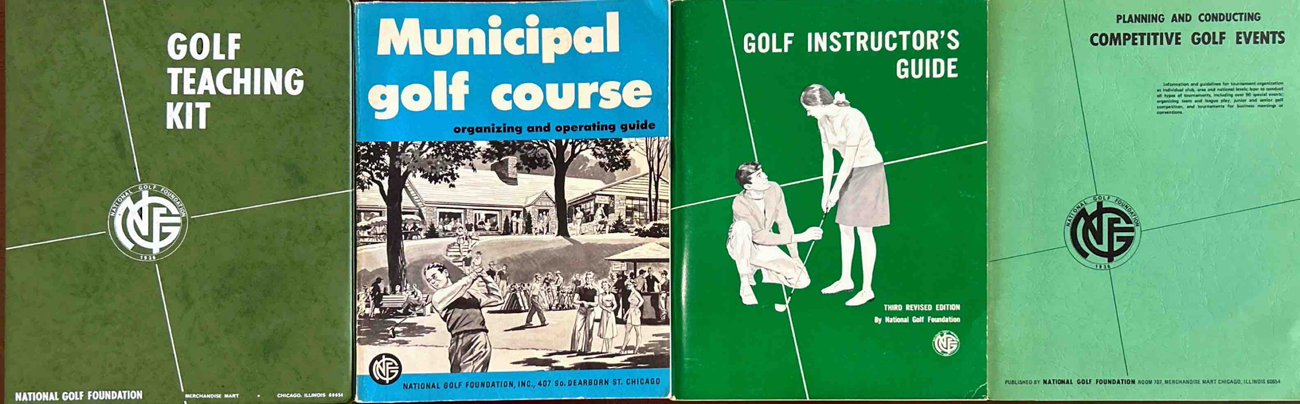
— Municipal golf course organizing and operating guide, NGF, 1955
The National Golf Foundation was established in 1936 on a simple conviction: that golf’s greatest value isn’t measured in rounds played or revenue generated, but in the number of lives it touches.
That belief has guided our work for nearly nine decades, through the postwar suburban boom, through the game’s democratization, through every shift in who plays, where they play, how they’re taught, and why it matters.
Long before participation metrics and demographic research, NGF’s founders understood something that city planners, recreation advocates, and communities are still discovering today: a golf course is more than a playing surface. It is a place where age, background, and circumstance recede, and a common pursuit takes over.
NGF co-founders Herb and Joe Graffis said it plainly: “Golf has had more to do with American development than any other sport… Golf keeps America beautiful.”
They weren’t speaking only of aesthetics. They were speaking of what happens when communities invest in spaces that invite everyone in and what the game, properly supported, gives back to the people who play it and the places that host it.
For much of the twentieth century, NGF was not only golf’s research authority, it was the operational backbone of the entire industry. NGF produced and distributed foundational resources used across the country: guides for organizing and operating municipal golf courses, teaching frameworks for instructors, competitive event planning resources for clubs and municipalities, and, perhaps most essentially, instructional materials designed to meet the recreational golfer exactly where they were. Not the competitive player refining a tour-caliber game, but the beginner standing on a first tee, looking for a way in.
That commitment to the everyday golfer has always been central to who we are. NGF’s instructional publications gave recreational players of all ages and abilities a structured, accessible path to learning the fundamentals: the grip, the stance, the swing, the etiquette, the culture of a game that rewards a lifetime of engagement. The goal was never to produce champions. It was to produce golfers. And in doing so, to grow a game that makes communities stronger, healthier, and more connected.
For a generation of operators and teaching professionals alike, the NGF manual on the shelf was as essential as the agronomic calendar, whether it guided a superintendent managing a municipal facility or an instructor introducing the game to a first-time player.
That dual commitment, to understanding the game and to building the infrastructure and the individual foundation that makes it genuinely accessible, has never left us.
“These public golf organizations provide a common meeting place for all ages and become a vital part of the community life, giving community contact and instilling good sportsmanship and neighborliness into the youth as well as the adult. What better meeting place have people than a golf course where the game is a common bond among all people?”
— NGF, 1955
NGF exists to ensure that the decisions shaping golf’s future, where courses are built, who has access to them, how its instructors are trained, how its facilities are managed, and how its community value is understood and preserved, are made with the best available intelligence. That means research, advocacy, and showing up at the table when municipalities allocate open space, when the business of golf requires a trusted partner, and when the broader conversation about the game’s role in American life is being had.
“It’s the pursuit of happiness” Herb Graffis said.
Nearly 90 years on, that remains the foundation of everything we do.
The National Golf Foundation has served the game, its players, its teachers, its operators, and the communities that host it since 1936.