3-Minute Business Insights
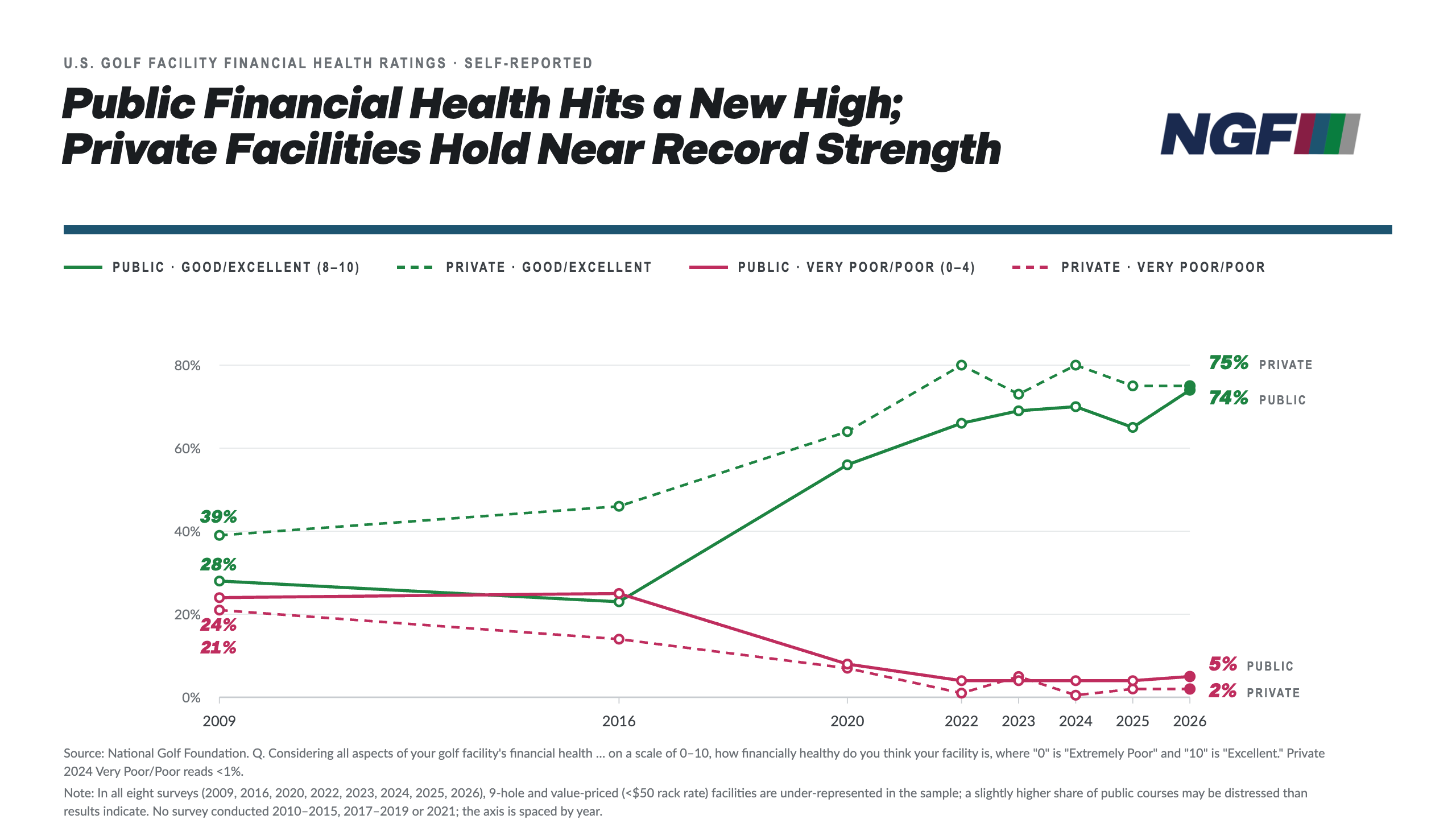
U.S. golf facilities are the healthiest they've been in decades, and NGF's longitudinal research shows why. See what's driving the turnaround.
The youth movement gets the headlines, but Baby Boomers are still punching above their weight, and the data tells the story.

Golfers 65 and older represent 22% of on-course participants but account for 27% of spending. With 10,000 Americans turning 65 every day through 2030, NGF President & CEO Greg Nathan explains why the Boomer generation remains one of golf's most important economic forces, and why a post-Boomer cliff is far less likely than many assume.

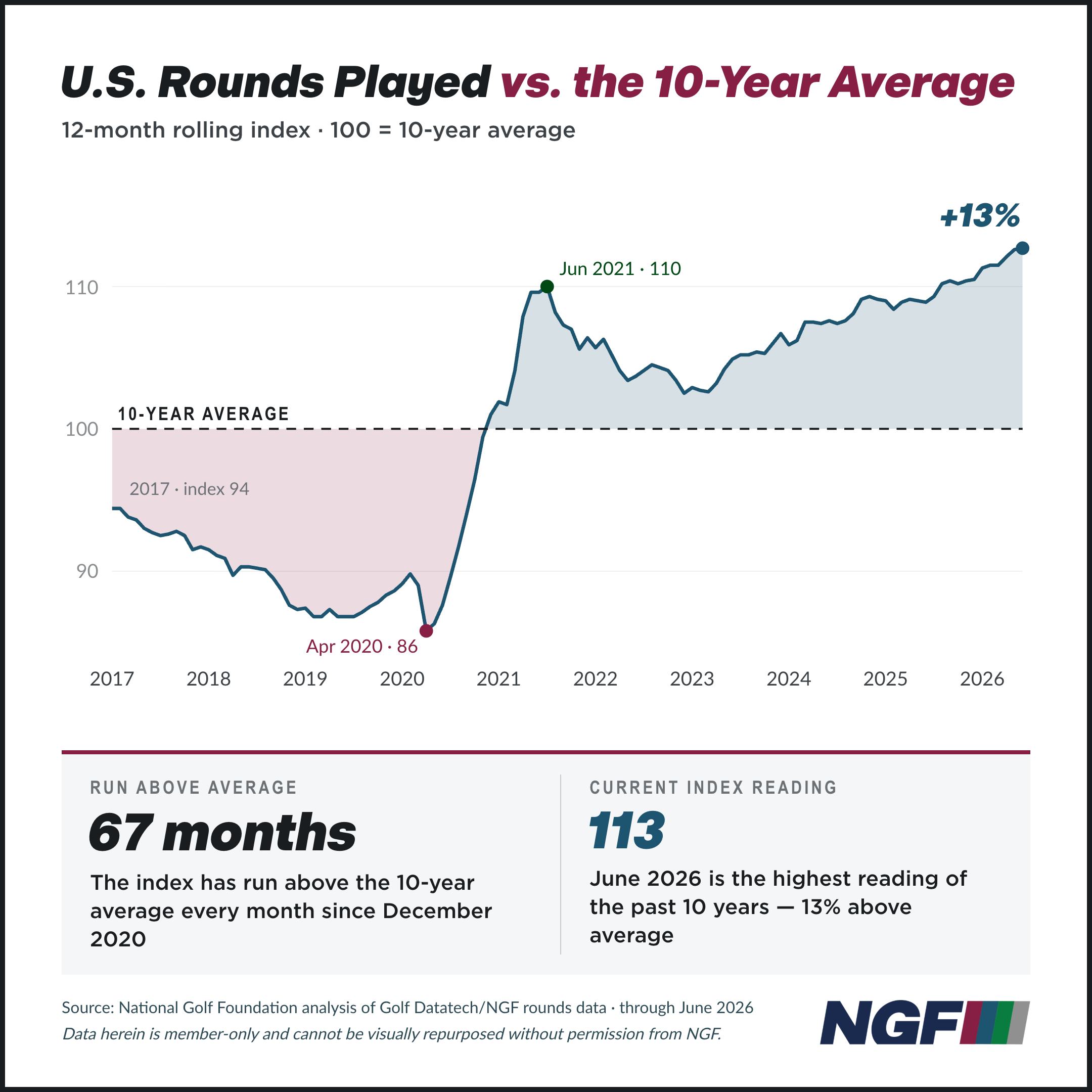
Midway through 2026, and in the heart of golf's peak season, play at U.S. courses is on pace to set another record for rounds -- provided any unforeseen disruptions during the second half of the year.
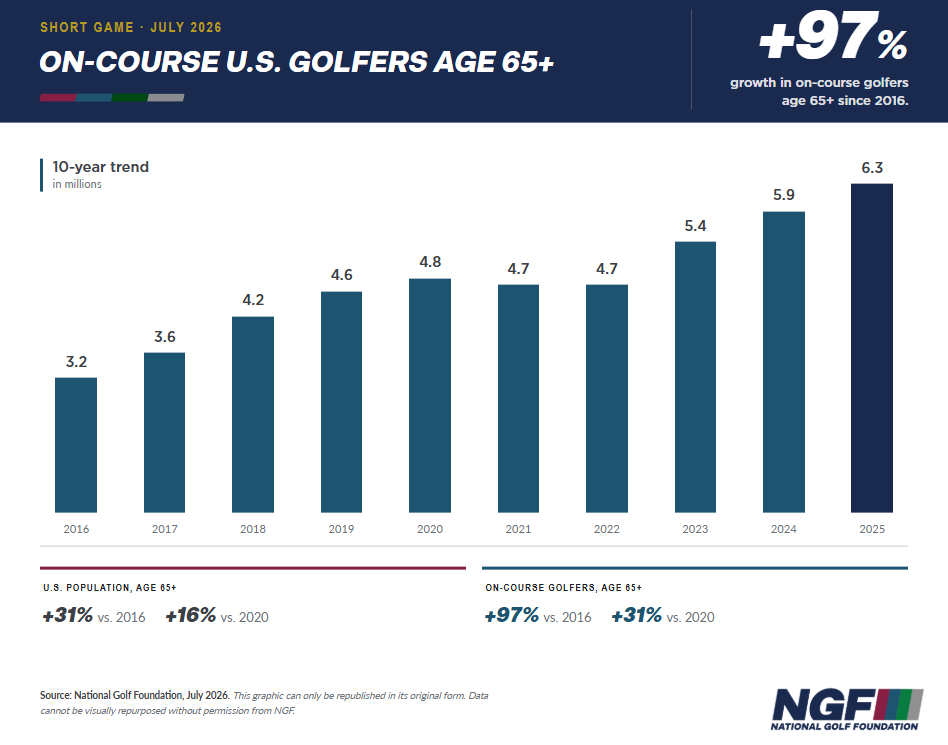
While there’s been a lot of understandable excitement around NGF’s reporting on golf’s youth movement, the other end of the age spectrum is seeing considerable participation momentum as well – a trend that is a byproduct of broader U.S. demographics.
Golfer growth among People of Color outpaces trend in U.S. population
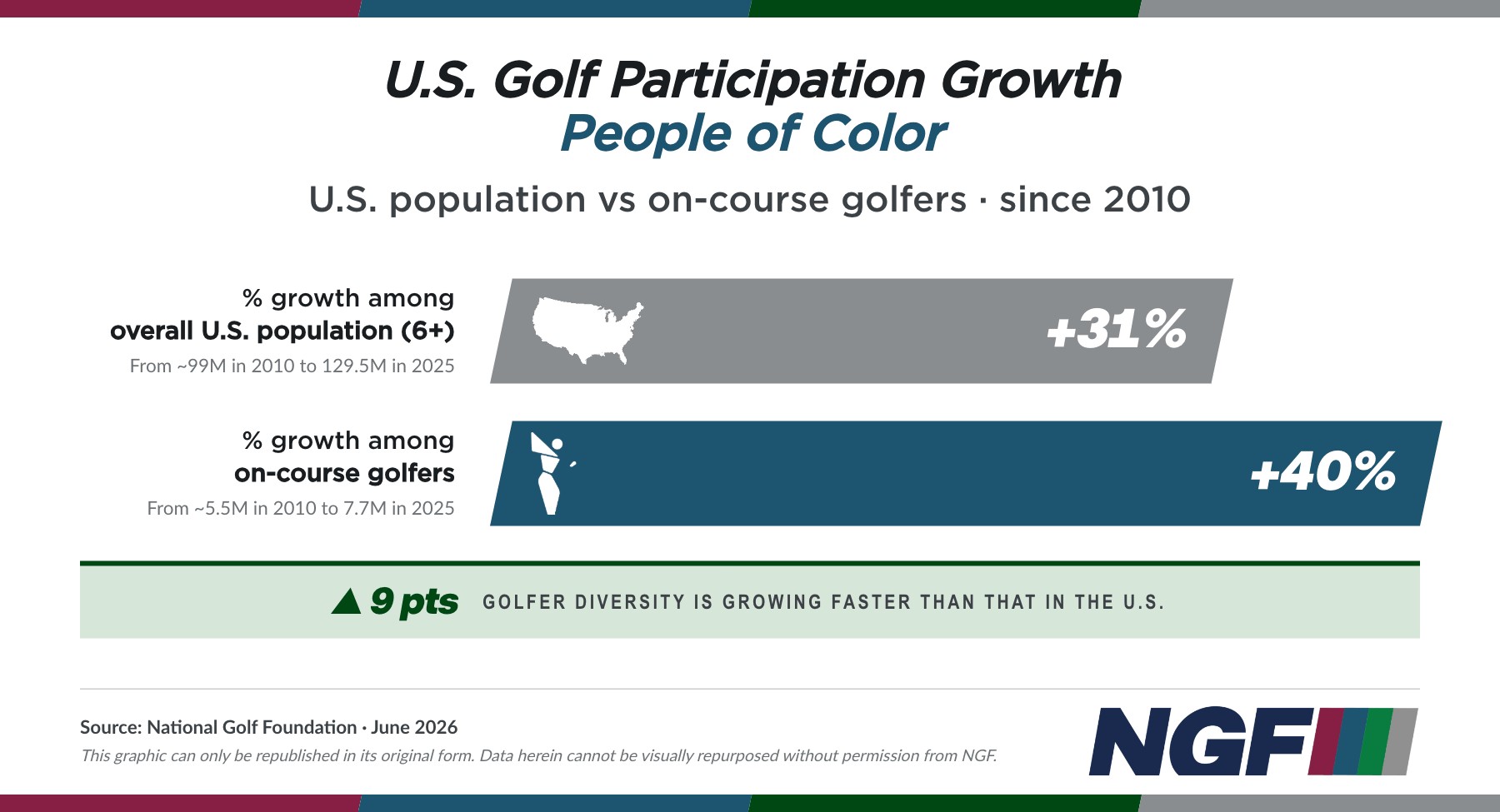
Over the past decade and a half, the U.S. population has gotten increasingly diverse -- with the total number of People of Color increasing by just over 30%. What’s notable, however, is that the Asian, Black and Hispanic on-course golfer base over that same period has risen even more appreciably.
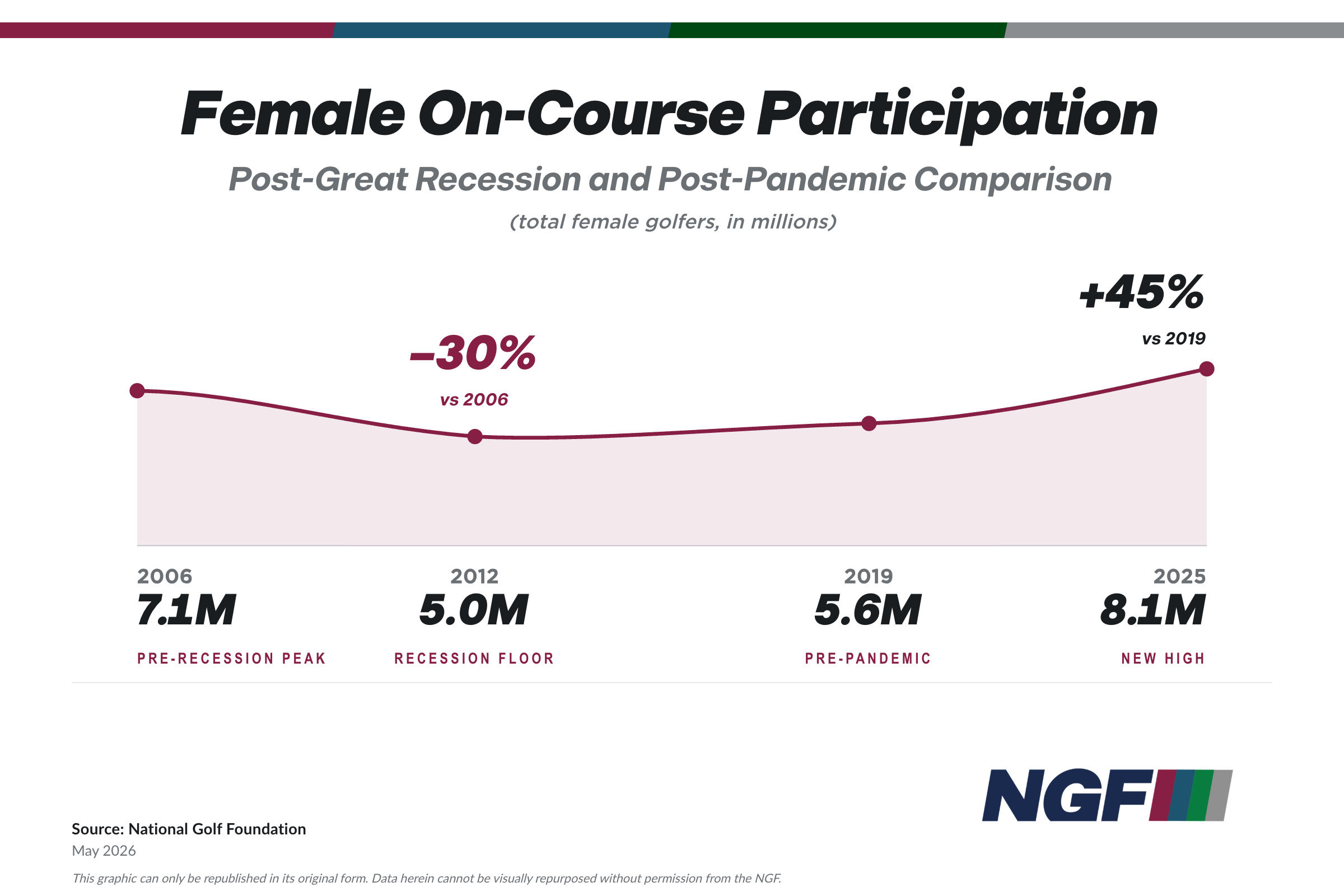
Women and girls have outpaced their male counterparts and accounted for a greater share of growth when it comes to post-pandemic participation gains in recreational golf. The recent momentum has more than reversed the declines seen in the female participation ranks following the Great Recession.
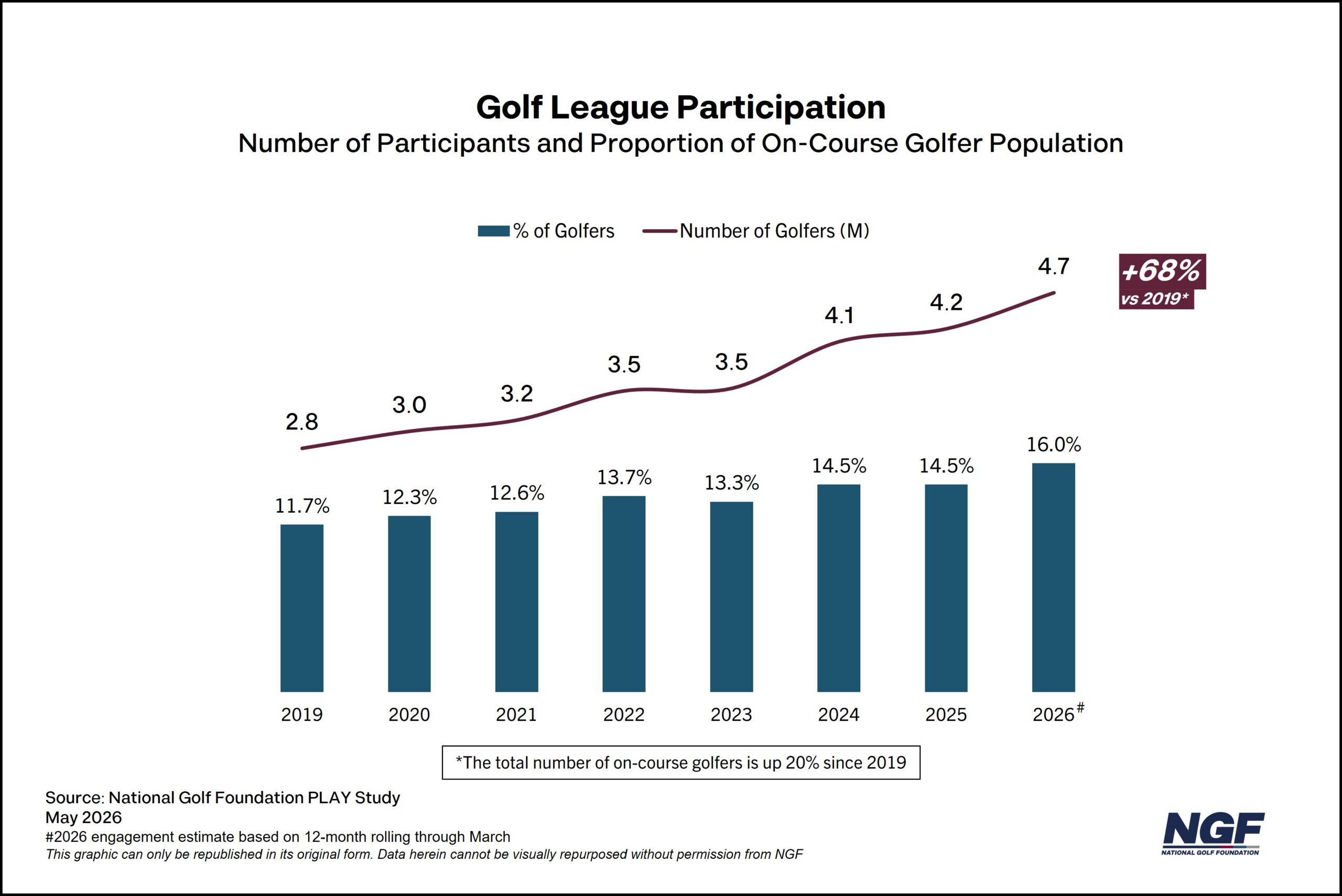
Amid increases in U.S. golfers and rounds-played over the past six years, the number of people participating in leagues – whether run internally by golf facilities or externally by national organizations – has jumped dramatically. This engagement is outpacing broader on-course participation changes in the post-pandemic era.
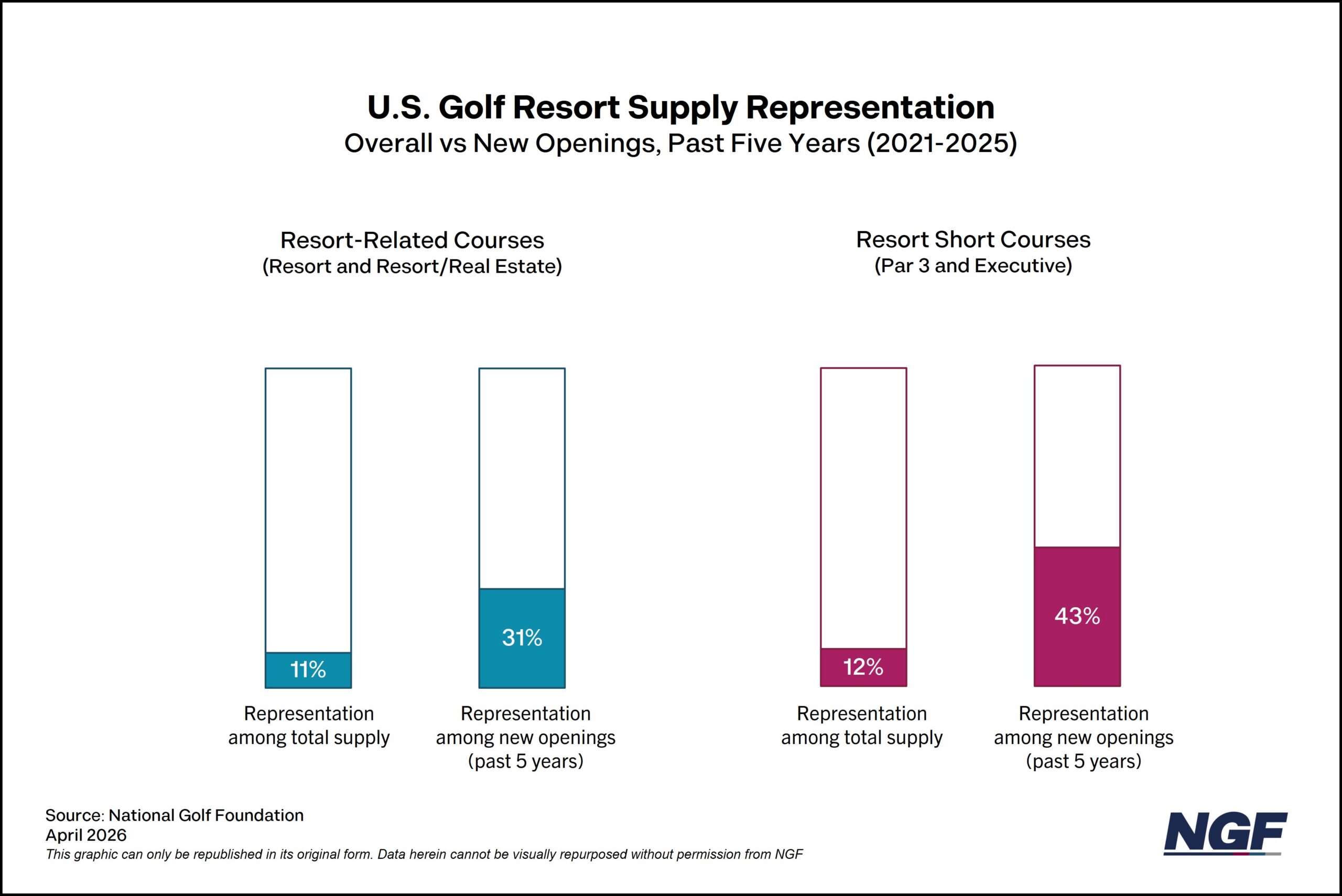
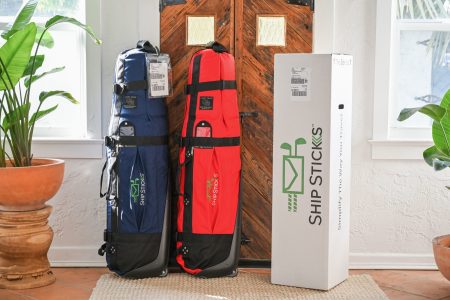
Each of the past four years have seen record or near record levels of Americans hitting the road to play golf and 2026 is poised to reach a new high in golf travel. Golf trips, whether with friends, family, significant others, colleagues or clients, are a vital part of the industry because they concentrate spend, time and engagement in ways everyday play doesn’t. And this elevated demand is impacting U.S. supply.
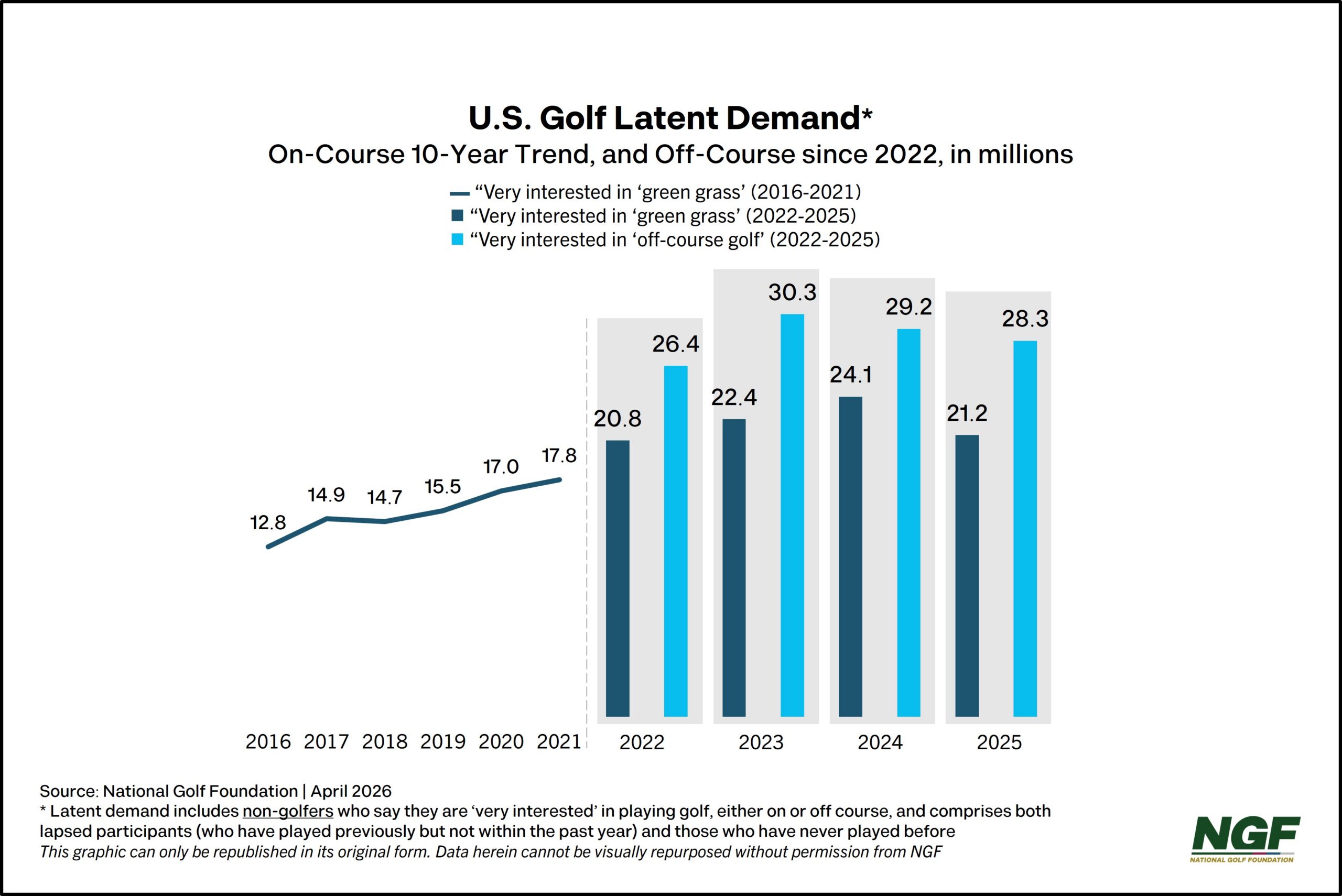
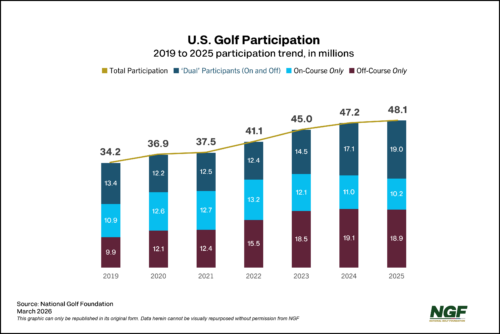
Interest in golf among non-golfers is close to record levels, even as the number of on-course participants has jumped by 20% over the past six years (with an even bigger increase in engagement among off-course formats). While maintaining high levels of attraction is important, converting that interest into sustainable participation is critical for the game’s future.
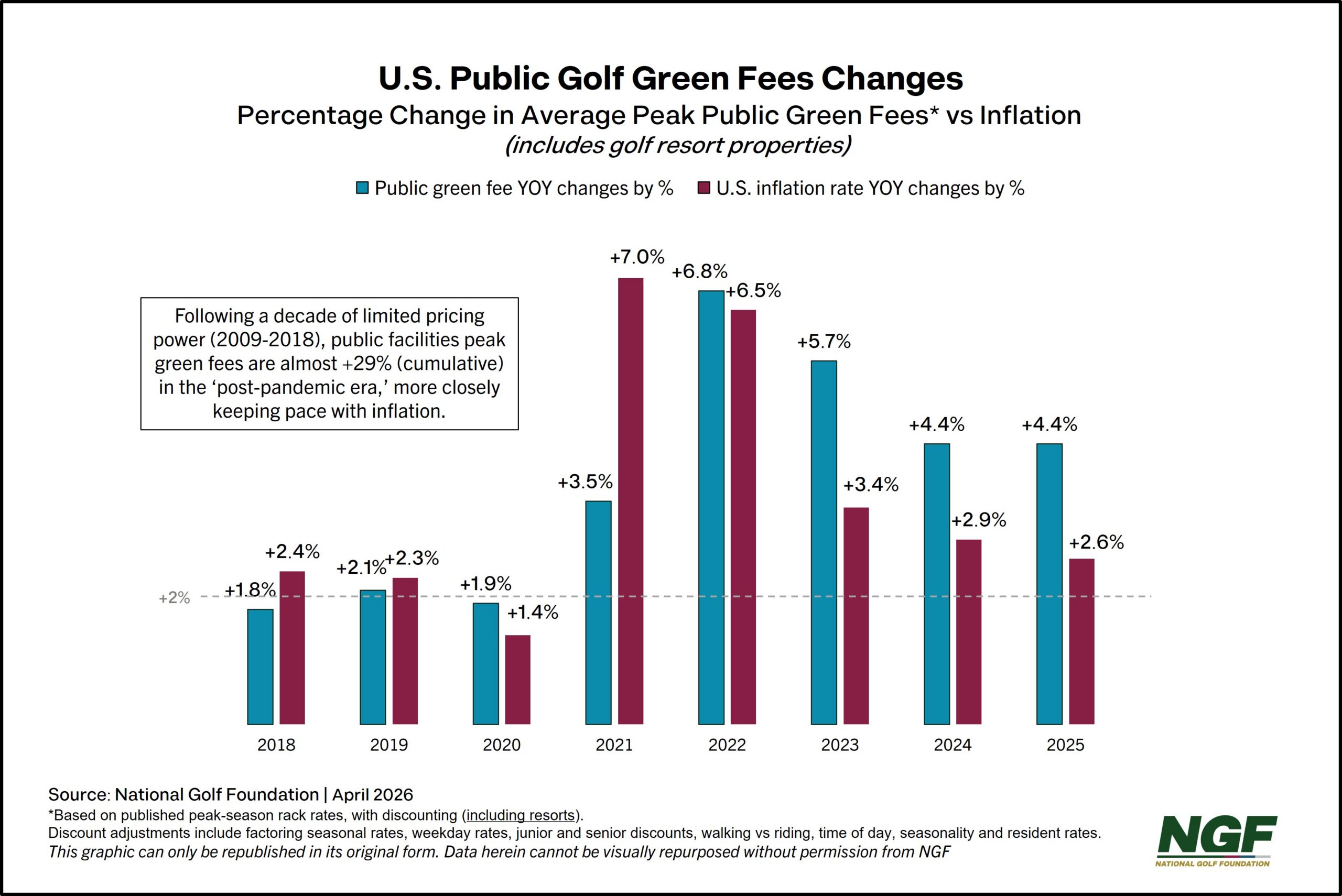
Following a decade of limited pricing power, peak green fees at public golf facilities in the U.S. have increased during the 'post-pandemic era." How closely do these increases mirror that of changes in inflation over that same period from 2019 to 2025?
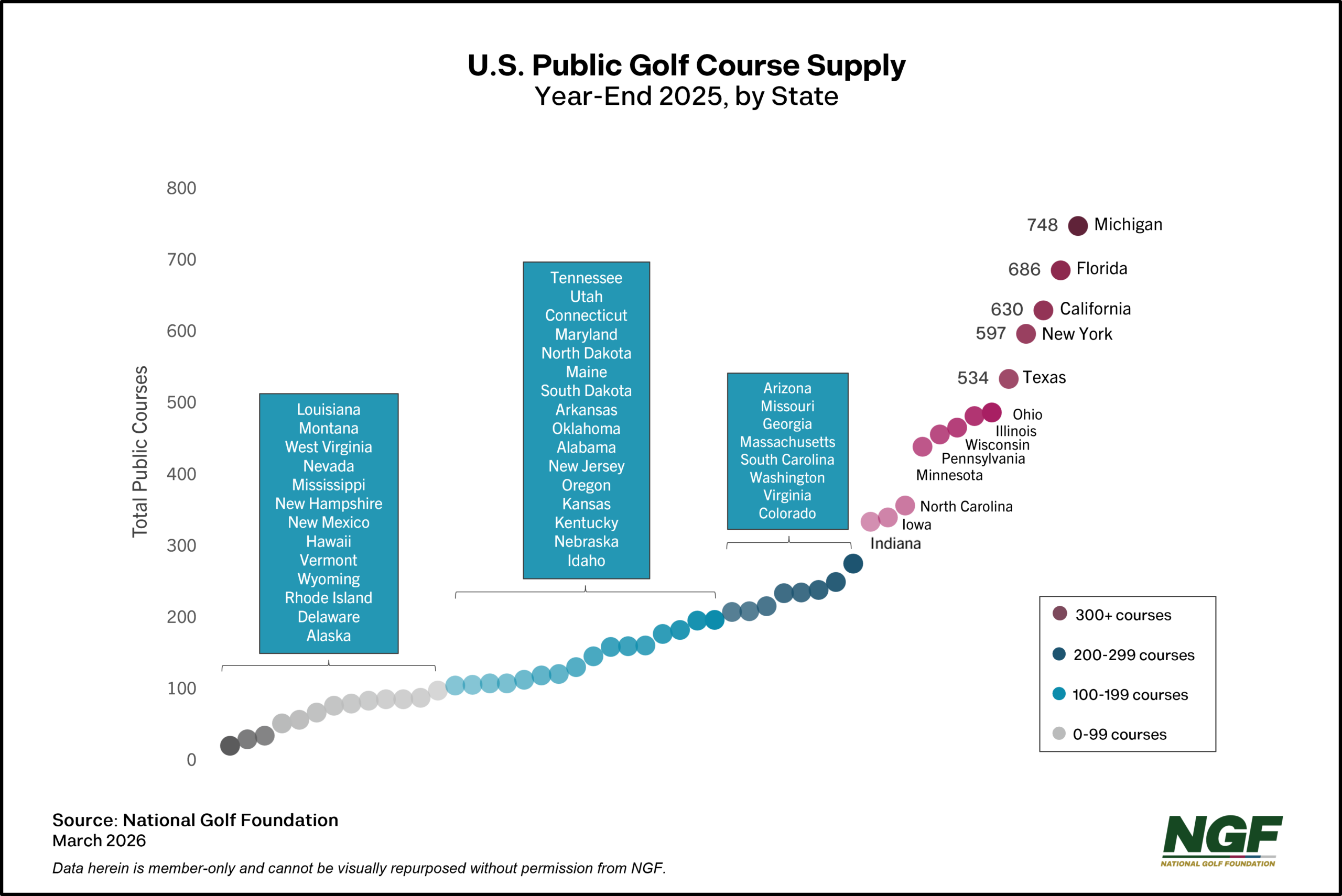
Golf is big business -- with a direct U.S. economic impact of almost $102 billion annually. NGF produced the most recent, and often-quoted U.S. Golf Economic Impact Study, and also conduct standard reports on golf's impact at the state level. These numbers are a part of many of our latest one-page state summaries that detail key supply and demand data at a more localized level -- now available to members.
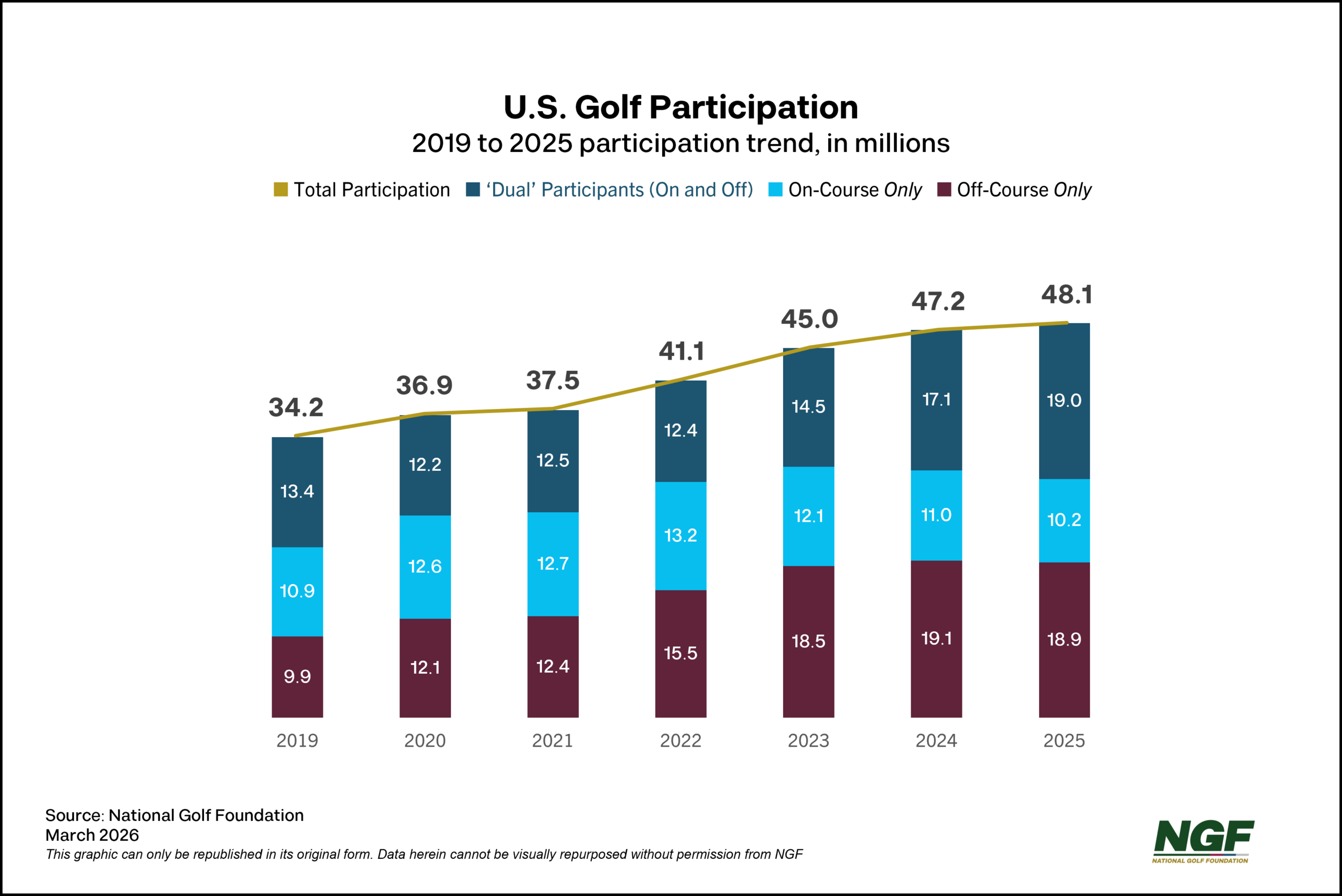
There was a time not so long ago when the question was “Why doesn’t golf grow?” Today, the industry is experiencing a resurgence that would have been difficult to predict.