Exclusive NGF Articles and Reports
Facility Management
Second straight peak season dip puts record play in question
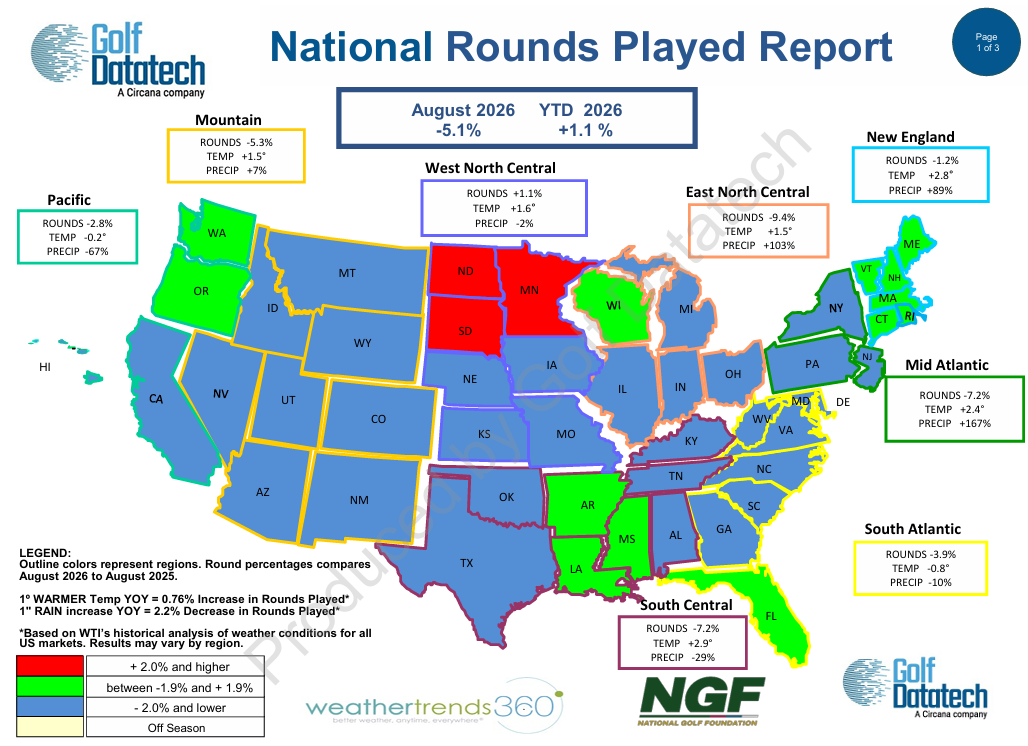
Elevated precipitation in golf-rich regions in the Northeast and Midwest helped contribute to a notable year-over-year decline in August play.
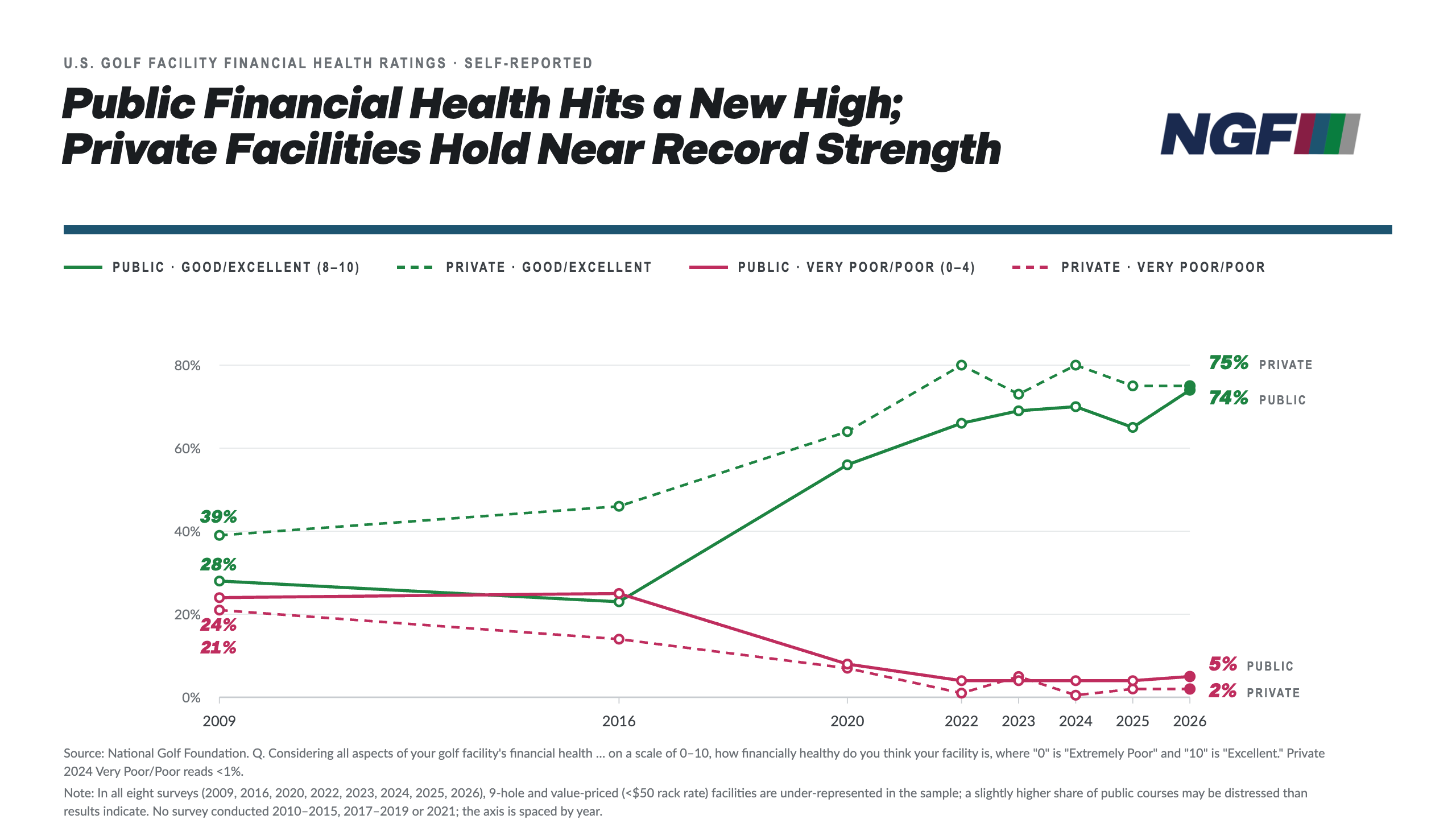
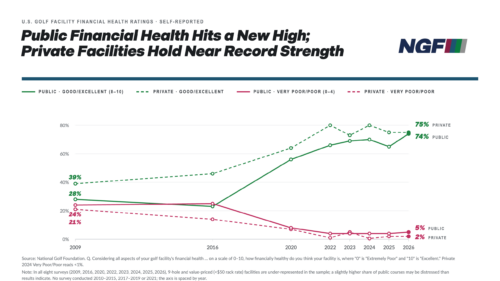
U.S. golf facilities are the healthiest they've been in decades, and NGF's longitudinal research shows why. See what's driving the turnaround.
Highest-volume month of the year for play shows first decline of 2026
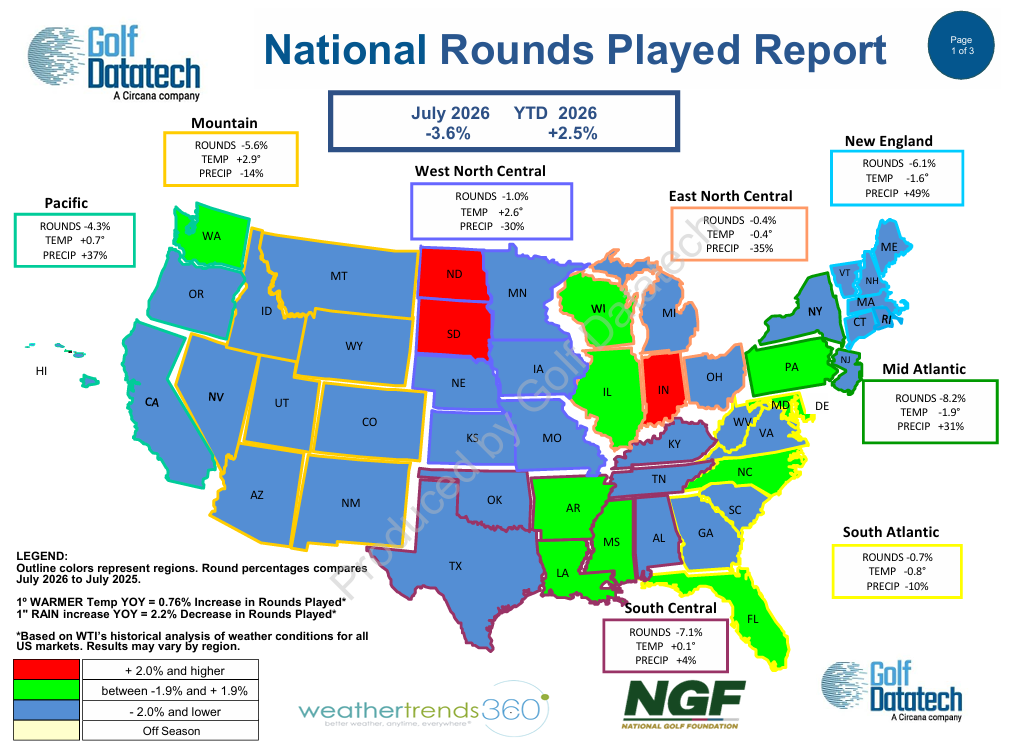
Rounds were down in July -- historically the highest-volume month of the year for play -- with some of the biggest year-over-year declines in golf-rich states.
Examining the Historic Surge in Beginning Golfers

More than 3 million people have taken up golf every year for six years running — a record high. This member piece breaks down what's driving the surge, from the pandemic to off-course golf, and why keeping beginners in the game may matter more than attracting them.
Topics: Associations, Course Operations, Facility Management, Green-Grass Facility, Instruction, Off-course Facility
‘Okay Boomer’: Golf Is Growing at Both Ends of the Age Spectrum
The youth movement gets the headlines, but Baby Boomers are still punching above their weight, and the data tells the story.

Golfers 65 and older represent 22% of on-course participants but account for 27% of spending. With 10,000 Americans turning 65 every day through 2030, NGF President & CEO Greg Nathan explains why the Boomer generation remains one of golf's most important economic forces, and why a post-Boomer cliff is far less likely than many assume.
Another Rounds Record?
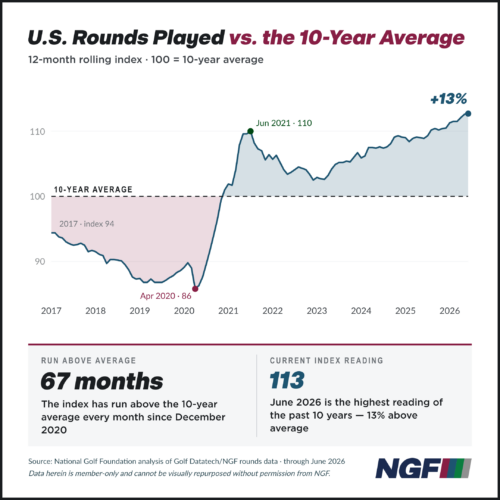
Midway through 2026, and in the heart of golf's peak season, play at U.S. courses is on pace to set another record for rounds -- provided any unforeseen disruptions during the second half of the year.
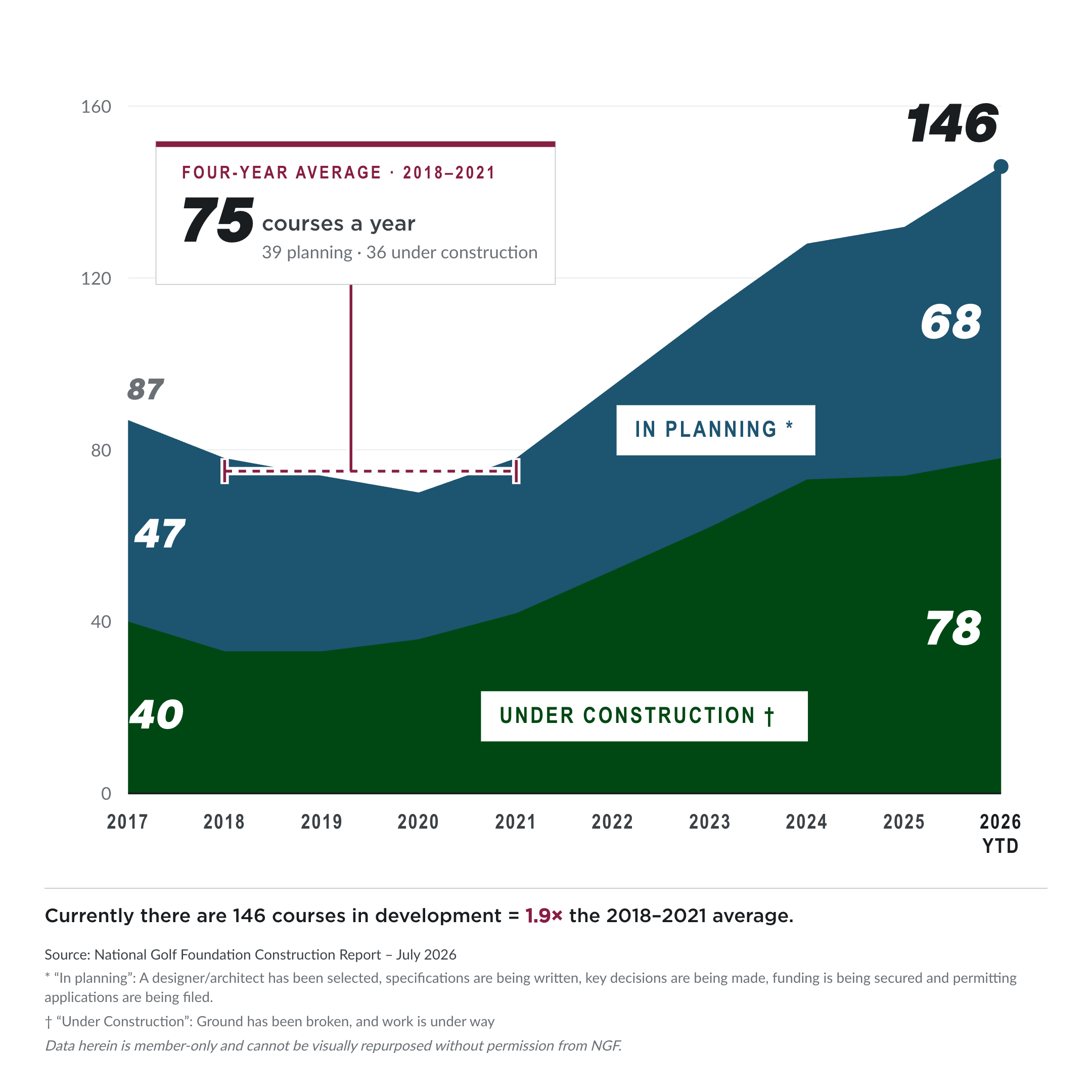
New U.S. golf course development is at its highest level in more than a decade, with active projects in 32 states — including three which together account for 40% of new course activity.
Play remains ahead of 2025's record pace at midway point of year
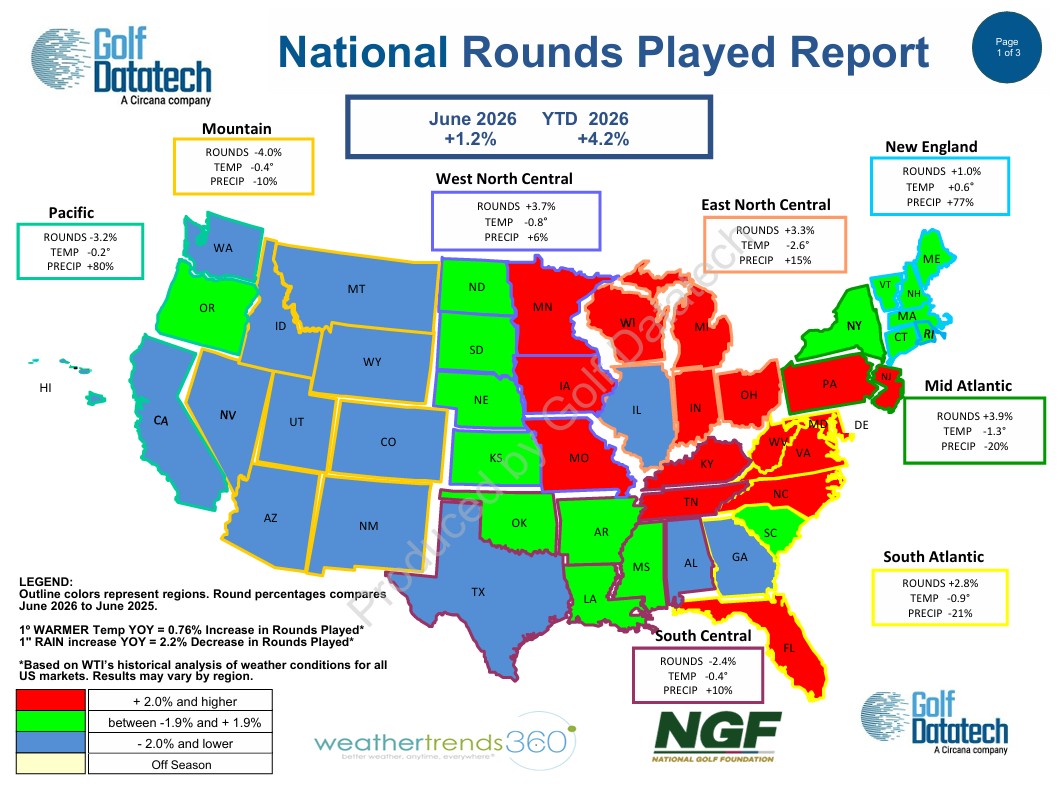
June is one of the highest-volume months of the year for U.S. play and rounds were slightly ahead of the 2025 pace on a national level.
Inside Golf’s Foundational Municipal Renaissance
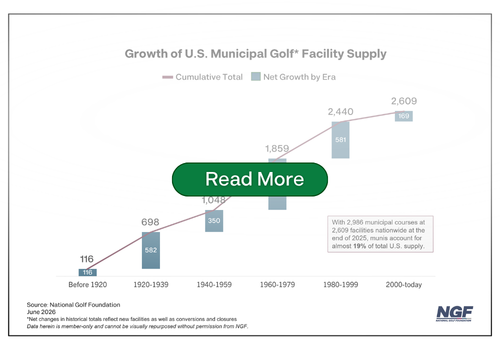
Approximately 70% of Core golfers had some of their earliest golf experiences at municipally owned or operated facilities, underscoring these courses' critical role as a primary pipeline for developing engaged participants. And as the number of municipal facilities has climbed to record levels, the customer base at many munis looks very much like a diverse cross-section of local residents of all ages, genders and ethnic backgrounds.
Golf’s Most Diverse Era Yet
Golfer growth among People of Color outpaces trend in U.S. population
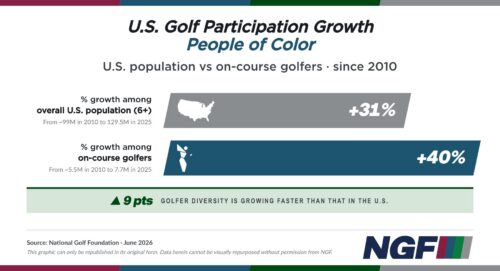
Over the past decade and a half, the U.S. population has gotten increasingly diverse -- with the total number of People of Color increasing by just over 30%. What’s notable, however, is that the Asian, Black and Hispanic on-course golfer base over that same period has risen even more appreciably.
The Record Rise of Female Golf
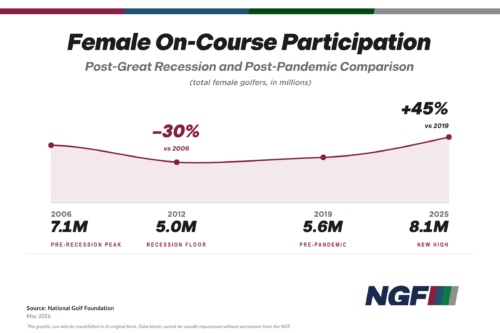
Women and girls have outpaced their male counterparts and accounted for a greater share of growth when it comes to post-pandemic participation gains in recreational golf. The recent momentum has more than reversed the declines seen in the female participation ranks following the Great Recession.
Topics: Business Management, Course Operations, Equipment & Gear, Facility Management, Green-Grass Facility, Instruction, Media & Marketing, Off-course Facility, Retail
Female Participation & Engagement Report Now Available
See the highlights from the new member report
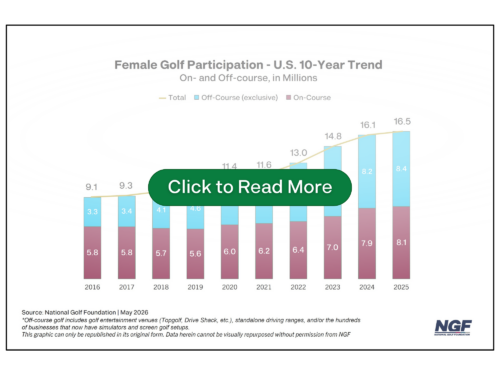
Women and girls have been major contributors to the recent participation surges within the recreational game, as the number of U.S. golfers continues to climb toward record territory.
Topics: Course Operations, Facility Management, Green-Grass Facility, Instruction, Media & Marketing, Off-course Facility, Specialized Services